

Logistics companies reduce costs in 2026 by controlling routes, fuel usage, warehouse movement, and delivery execution through data-driven systems. Practical strategies such as route optimization, fuel tracking, automation, and inventory control directly lower operational expenses without affecting service quality .
Rising fuel prices, labor expenses, and delivery pressure continue to reshape how logistics operations manage profitability. Efficient cost control now depends on visibility across fleet activity, warehouse flow, and shipment movement rather than limiting resources.
Operational waste often appears through idle time, empty miles, delayed routes, and unstructured warehouse handling. Systems that provide real-time tracking and performance insights allow faster decisions, helping businesses maintain consistent delivery output while protecting margins.
Why Reducing Logistics Costs Matters?
Cost reduction matters for logistics companies due to rising fuel costs, labor expenses, delivery pressure, and shrinking profit margins.
- Cost Pressure: Fuel prices, labor expenses, and delivery demands continue to increase across logistics operations. Profit margins now depend on route control, warehouse output, and fleet performance.
- Waste Points: Cost reduction no longer comes from cutting essential resources or limiting service capacity. Real savings come from reducing idle time, route delays, excess inventory movement, and avoidable warehouse errors.
- Live Visibility: Logistics companies need visibility across assets, shipments, and inventory to control spending. Access to live operational data shows where time, fuel, and labor are being lost.
- Quick Response: Data-driven systems help teams respond to delays, demand shifts, and route disruptions. Faster action supports cost control without reducing delivery reliability or service quality.
- Margin Protection: Cost control supports immediate savings and long-term financial stability. Logistics companies that manage transportation, warehousing, and delivery costs remain in a stronger position to protect margins.
What Are the Top Cost Reduction Strategies for Logistics Companies?
Logistics costs come down when transportation flow, fleet usage, warehouse operations, inventory levels, and delivery execution are managed with control and visibility.

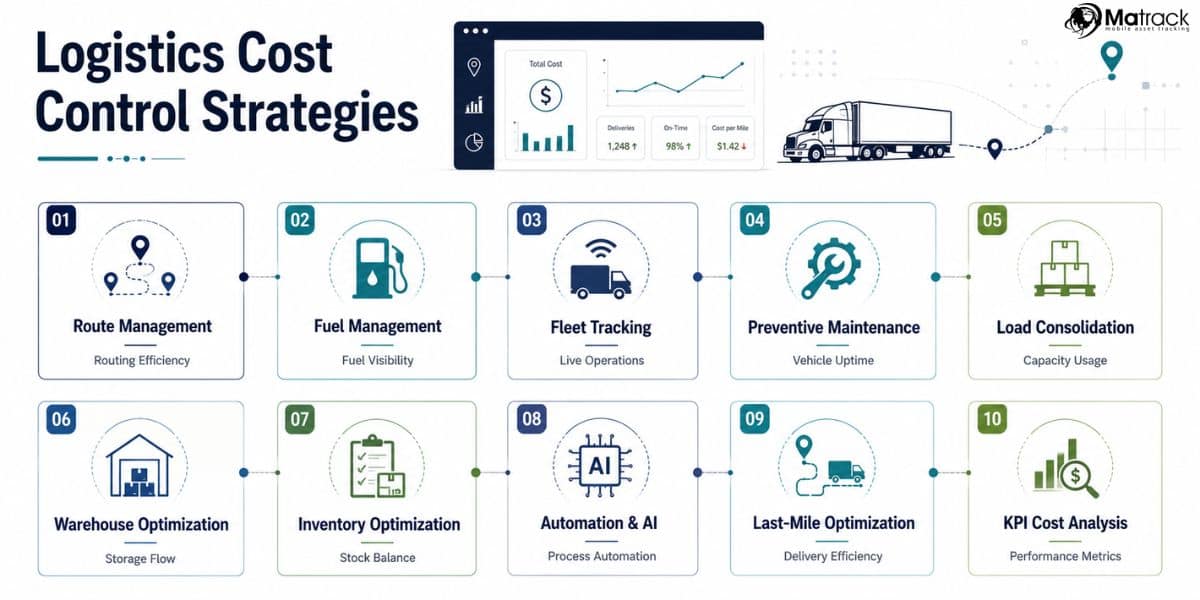
1. Route Management
Route optimization focuses on how delivery routes are planned across daily operations. Poor routing often leads to longer travel distances, missed delivery windows, and unnecessary fuel usage.
Route planning helps organize stops based on traffic patterns, delivery timing, and location clusters. This reduces empty miles and keeps vehicle movement aligned with planned schedules.
2. Fuel Management
Fuel management addresses one of the most variable costs in logistics operations. Idle time, aggressive driving, and route inefficiencies often increase fuel consumption without clear visibility.
Tracking fuel usage across trips highlights where losses occur during operations. Adjustments in driving behavior and route selection help keep fuel spend under control.
3. Telematics and Fleet Tracking
Telematics and fleet tracking bring visibility into vehicle movement, route adherence, and driver activity. Without tracking, route deviations and unplanned stops can increase operational cost.
Live data allows dispatch teams to monitor trips and respond to delays as they happen. Vehicle movement stays aligned with delivery plans, reducing time and resource loss.
4. Preventive Maintenance
Preventive maintenance focuses on servicing vehicles before mechanical issues lead to breakdowns. Delayed maintenance often results in higher repair costs and disrupted deliveries.
Scheduled servicing keeps vehicles available for daily operations. Stable fleet condition supports uninterrupted transport activity and reduces unexpected repair expenses.
5. Load Consolidation
Load consolidation improves how shipments are grouped before dispatch. Moving partially filled loads increases the number of trips required across the network.
Combining shipments based on destination and capacity reduces trip frequency. Transport planning becomes more structured, which helps control fuel and labor usage.
6. Warehouse Optimization
Warehouse optimization focuses on how goods move inside storage facilities. Poor layout and unstructured picking paths increase handling time and labor effort.
Organized storage and defined movement paths reduce delays in picking, packing, and staging. Order processing becomes smoother, supporting consistent outbound flow.
7. Inventory Optimization
Inventory optimization manages stock levels based on demand patterns and order frequency. Excess inventory increases storage cost and ties up working capital.
Balanced stock levels reduce overstocking and prevent stock shortages. Warehouse space and handling effort stay aligned with actual order movement.
8. Automation and AI
Automation and AI reduce manual involvement in logistics processes such as tracking, documentation, and order handling. Manual workflows often slow operations and introduce errors.
Data-driven insights help identify demand trends, route patterns, and operational gaps. Planning teams use this information to guide decisions across logistics activities.
9. Last-Mile Delivery Optimization
Last-mile delivery optimization focuses on improving the final stage of delivery operations. Failed deliveries and poor route sequencing increase repeat trips and delivery costs.
Planned delivery schedules and coordinated routes reduce unnecessary movement. Delivery execution remains stable without adding extra operational load.
10. KPI Tracking and Cost Analysis
KPI tracking and cost analysis provide visibility into logistics performance across operations. Without measurement, cost drivers remain hidden across fleet, warehouse, and delivery functions.
Metrics such as cost per mile, delivery time, and asset usage highlight where adjustments are needed. Operational decisions become more aligned with cost control.
How Do These Strategies Improve Efficiency?
Cost reduction strategies improve logistics efficiency by reducing waste across transportation, fleet operations, warehouse movement, inventory control, and final-mile delivery.
- Lower Fuel Use: Route planning, fuel management, and load consolidation reduce unnecessary mileage, idle time, and repeated trips. Less fuel waste keeps transportation costs under control and supports stable daily movement.
- Steady Fleet Use: Telematics, fleet tracking, and preventive maintenance keep vehicles available for scheduled operations. Fewer breakdowns and route deviations help maintain planned delivery flow.
- Warehouse Flow: Warehouse optimization and inventory control reduce delays in picking, packing, staging, and storage movement. Goods move through the facility with fewer interruptions and less handling pressure.
- Planned Deliveries: Last-mile delivery optimization improves stop sequencing, delivery timing, and route coordination. Fewer failed deliveries reduce repeat trips and support consistent service output.
- Data Visibility: Automation, AI, and KPI tracking reveal where cost and performance issues are developing. Operations teams can respond with clearer planning across transport, storage, and delivery functions.
- Margin Control: These strategies do not only reduce isolated expenses across one area of the business. They also connect daily operational control with delivery performance, asset use, and long-term profit stability.
What Should Companies Look for in Cost-Saving Tools?
Cost-saving tools should support visibility, coordination, and control across daily transport, storage, and delivery activity.
- Live Tracking: Useful platforms should show where vehicles, shipments, and stock are moving at any given time. Current operational data helps teams spot delays, route issues, and process gaps early.
- Connected Systems: Software should connect with transport, warehouse, and business platforms without creating isolated workflows. Shared data across departments reduces repeated entry and avoids coordination gaps.
- Task Automation: Repetitive work such as updates, documentation, and routine processing should be handled with minimal manual effort. Fewer manual steps reduce slowdowns in day-to-day operations.
- Performance Reports: Platforms should show where money, time, and asset use are shifting across the business. Those reports help managers see which areas need operational changes.
- Room to Grow: Systems should continue to support the business as order volume, fleet size, and delivery demands increase. Growth should not create process strain or fragmented oversight.
- Central Oversight: Routes, vehicles, facility activity, and shipment progress should be manageable from one operational view. Shared control supports smoother coordination between teams.
- Practical Use: Dispatchers, supervisors, and warehouse staff should be able to use the system without friction during active operations. Easy access to useful information supports faster decisions.
How Can Technology Support Long-Term Cost Reduction?
Technology supports long-term cost reduction through connected operations, planning support, route control, workflow automation, and performance visibility.
Connected Systems
Connected systems keep transport, warehouse, inventory, and delivery data aligned across daily operations, which reduces coordination gaps and limits repeated manual work between teams.
Planning with Forecasting
Planning with forecasting tools helps align stock levels, shipment timing, and resource allocation with actual demand, which reduces excess inventory, rushed deliveries, and uneven operational load.
Route Control
Route control systems support trip planning, stop sequencing, and live tracking, which helps reduce empty miles, delivery delays, and fuel loss across active routes.
Workflow Automation
Workflow automation handles routine tasks such as documentation, updates, and internal process handoffs, which reduces manual effort and keeps daily operations moving with fewer processing delays.
Performance Visibility
Performance visibility gives managers access to fuel trends, labor activity, asset use, and delivery data, which helps identify cost pressure early and supports timely operational adjustments.
Use Matrack GPS Fleet Tracking System To Reduce Logistics Costs
Using Matrack GPS Fleet Tracking System reduces logistics costs by providing real-time visibility of every vehicle in operation. With accurate location data, fleet managers make faster routing decisions that cut fuel usage and delivery delays.
Matrack helps monitor driver behavior, including speeding, harsh braking, and idling. This tracking improves driving performance, which reduces vehicle wear and lowers maintenance expenses.
The system includes alerts for unauthorized use and extended stops, helping avoid unnecessary mileage and downtime. By improving fleet efficiency and reducing misuse, Matrack directly lowers overall operating costs.
The post Top 10 Cost Reduction Strategies for Logistics Companies in 2026 first appeared on Matrackinc.